
Professional Aircon Installation Singapore
RM Acelect Engineering provides aircon installation and replacement services for HDB flats, condominiums, landed homes, offices, shops and suitable commercial premises across Singapore. We look beyond simply mounting the indoor and outdoor units: system selection, room requirements, piping, drainage, electrical scope, access and final testing all affect how well an installation performs.
A Good Aircon Installation Starts Before the Technician Arrives
Choosing an aircon system is not only about selecting a brand and the number of indoor units. The proposed system needs to suit the rooms, expected cooling load, outdoor unit location, piping route, drainage arrangement and site conditions.
Installation problems often appear later rather than on the first day. Poorly planned drainage can contribute to water leakage. Inadequate insulation can lead to condensation. An unsuitable system or room capacity can affect comfort and operating performance. Difficult access can also change the installation method and cost.
Our objective is to establish the installation scope clearly before work starts, then install and test the system according to the agreed requirements.
Aircon Installation Services We Handle
New Aircon Systems
Installation for homes, offices, shops and suitable commercial premises where a new air-conditioning system is being introduced.
- System planning
- Indoor/outdoor unit installation
- Refrigerant piping
- Drainage arrangement
- Testing and commissioning
Existing System Replacement
Replace ageing or unsuitable equipment while assessing the existing installation and requirements of the proposed new system.
- Existing unit removal
- Condition assessment
- New system installation
- Required piping/drainage work
- Testing after installation
Multi-Split Systems
Installation for systems with multiple indoor units connected to outdoor condensing equipment, subject to system design and site requirements.
- Room-by-room requirements
- Indoor unit positioning
- Piping route planning
- Drainage coordination
- System performance checks
Commercial Installation
Suitable installation work for offices, shops and other commercial premises, with scope determined by the equipment and site conditions.
Wall-Mounted Units
Installation of split-type wall-mounted indoor units with appropriate refrigerant, drainage and electrical arrangements.
Cassette & Ducted Systems
Installation requirements for ceiling cassette and ducted systems can differ substantially from standard wall-mounted systems and are assessed according to the site.
Choosing the Right System for the Property
The number of indoor units is only one part of the decision. Room size, room use, exposure, occupancy, preferred temperature, outdoor unit location and available installation routes can all influence the appropriate system.
We can discuss the practical requirements with you before quotation. If a floor plan is available, it can help us understand the proposed room layout, but the final installation scope may still require site assessment.
We also install and service common major brands, including Daikin, Mitsubishi Electric, Panasonic, Midea, LG, Samsung, Hitachi, Fujitsu, Toshiba and Mitsubishi Heavy Industries, subject to model availability and project requirements.
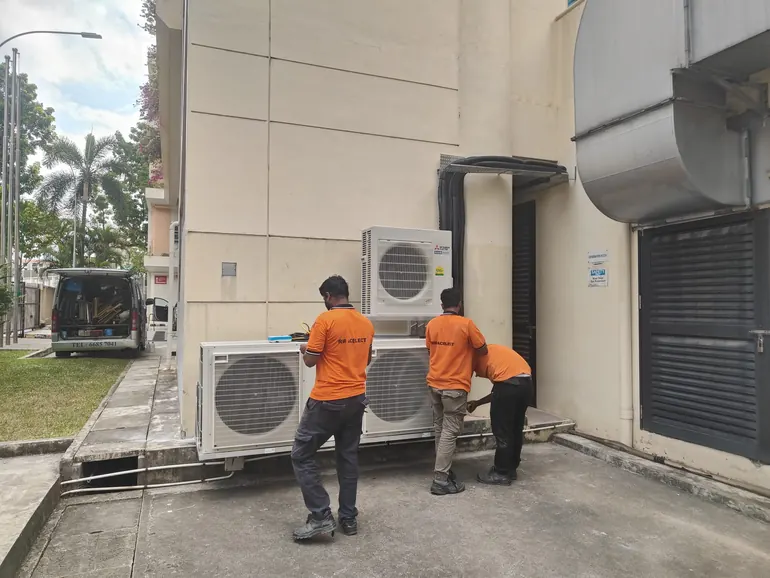
What We Consider Before Quotation
Property & Room Requirements
We identify the property type, rooms to be cooled, intended use and practical installation requirements.
System Configuration
The proposed number of indoor units, outdoor unit arrangement and system configuration are considered together.
Indoor Unit Positions
Positioning affects airflow, access for future servicing, piping routes and the overall finish.
Outdoor Unit Location
The condenser location, support/bracket requirements, access and allowable installation conditions are assessed.
Piping & Drainage Route
Refrigerant piping, insulation, drainage and trunking/concealment requirements can materially affect the work scope.
Electrical Requirements
Existing power points, isolators and any required electrical work need to be considered separately from the aircon equipment itself.
Access & Site Conditions
High-level work, restricted access, concealed routes, existing finishes and other site constraints may affect the method.
Final Testing & Handover
After installation, the system is operated and checked so the agreed installation can be handed over in a properly tested condition.
What Is Normally Involved in an Aircon Installation?
| Installation Area | Typical Scope | Why It Matters |
|---|---|---|
| Indoor units | Positioning, mounting and connection to the proposed system | Position affects airflow, appearance and future service access. |
| Outdoor condenser | Mounting/support and connection according to the site arrangement | Stable support, access and suitable location are important for safe operation and maintenance. |
| Refrigerant piping | Correct pipe sizing, routing and insulation for the selected system | Poor routing or insulation can contribute to performance and condensation problems. |
| Drainage | Drain pipe routing with suitable fall/arrangement where applicable | Improper drainage can contribute to water leakage and maintenance problems. |
| Electrical | Connection to the appropriate existing or newly provided electrical arrangement | Electrical requirements vary by property and scope and may require separate work or approvals. |
| Testing | System operation and performance checks after installation | Testing helps identify installation issues before handover. |
New Installation vs Replacement: They Are Not Always the Same Job
New System
A new installation may require a complete decision on system configuration, indoor/outdoor locations, piping, drainage and electrical arrangement.
It is particularly important to plan routes before renovation finishes or other building works conceal them.
Existing System
A replacement may look simpler because pipes and drainage already exist, but existing materials should not automatically be reused.
Compatibility, condition, refrigerant requirements, insulation and routing should be considered against the proposed system.
Changing the Layout
Moving an indoor or outdoor unit can introduce additional piping, drainage, electrical, wall reinstatement and access requirements.
A site assessment is the safest way to determine the actual scope.
HDB Aircon Installation: Important Requirements
HDB aircon installation is subject to requirements that can differ according to the flat, electrical arrangement and proposed work.
HDB's current renovation guidance states that air-conditioners must be installed by a BCA-trained air-conditioning condensing unit installer. HDB also specifies requirements relating to electrical loading, condensing-unit weight and new electrical points or isolators. Where new electrical work is involved, the applicable permit and testing requirements must be considered. HDB also requires an installation report to be submitted to the managing HDB Branch within 14 days after installation.
Reference: HDB Renovation Guidelines for Air Conditioner Installation Works.
How to Get a Better Installation Quote
A useful quotation starts with useful information. If you are enquiring about a new installation or replacement, prepare the following where available:
Property Type
HDB, condominium, landed, office, shop or other commercial premises.
Number of Rooms
Tell us which rooms require air-conditioning and approximate room sizes if known.
Preferred Brand
Tell us whether you already have a preferred brand or would like options to compare.
Floor Plan
A floor plan or clear room layout can help with an initial discussion.
Existing System
For replacement, provide photos and details of existing indoor/outdoor units if possible.
Piping Preference
Tell us whether exposed trunking, concealed piping or another finish is preferred.
Aircon Installation FAQ
Do you provide aircon installation in Singapore?
Yes. We provide air-conditioning installation for HDB flats, condominiums, landed properties, offices, shops and suitable commercial premises across Singapore. The actual scope is based on the system and site.
Do you install new systems and replace old systems?
Yes. We handle new installations and replacement projects. Replacement work requires checking the existing installation and its compatibility with the proposed new system.
How much does aircon installation cost?
Installation is quoted according to the system, number of indoor units, brand and model, piping and drainage requirements, electrical scope, access and site conditions. We recommend getting an itemised quotation rather than comparing installation prices without checking what is included.
Can existing copper piping be reused?
Sometimes, but it should not be assumed. Pipe size, condition, insulation, routing, refrigerant compatibility and the new system requirements should be assessed first.
Can you install aircon for an HDB flat?
Yes, subject to applicable HDB and electrical requirements. HDB has specific conditions relating to installation, electrical loading, condensing units and new electrical points or isolators.
Do you install Daikin, Mitsubishi Electric and other major brands?
We handle common major brands and can discuss appropriate equipment for the project. Model availability and suitability depend on the current system and installation requirements.
Do I need a site assessment before getting a quotation?
It depends on the project. An enquiry can start with property details, floor plan, preferred system and photos. A site assessment is useful where piping, drainage, outdoor-unit location, electrical work or access need to be confirmed accurately.
Can I choose concealed piping?
Concealed piping may be possible depending on the property, renovation stage, existing structure and available routes. It normally requires more planning than standard exposed trunking.
Planning a New Aircon Installation or Replacement?
Send us your property type, number of rooms, preferred brand if any, existing system details for replacement projects, and photos or a floor plan if available. We can then understand the project before discussing the installation scope.